
- The Biological Inspiration: Our Brain's Neurons
- The Birth of the Artificial Neuron (Perceptron)
- The Blueprint of Artificial Neurons: Core Components
- Inputs: The Data Stream
- Weights: The Importance Factor
- Bias: The Activation Threshold Adjuster
- The Summation Function: Gathering Evidence
- The Activation Function: Making the Decision
- Output: The Final Signal
- How These Neurons Learn
- From Individual Neurons to Complex Networks
- Unlocking the Future with Neuron Understanding
Neurons are the fundamental building blocks of intelligence, both in the intricate biological machinery of our brains and in the cutting-edge realm of artificial neural networks. For many, the concept of “neural networks” sounds dauntingly complex, but at its heart lies the surprisingly straightforward idea of a neuron. Understanding these individual processing units is the key to unlocking the basic principles of how artificial intelligence learns, recognizes patterns, and makes decisions. Let’s embark on a journey to demystify neurons and lay a solid foundation for comprehending neural network basics with ease.
The Biological Inspiration: Our Brain’s Neurons
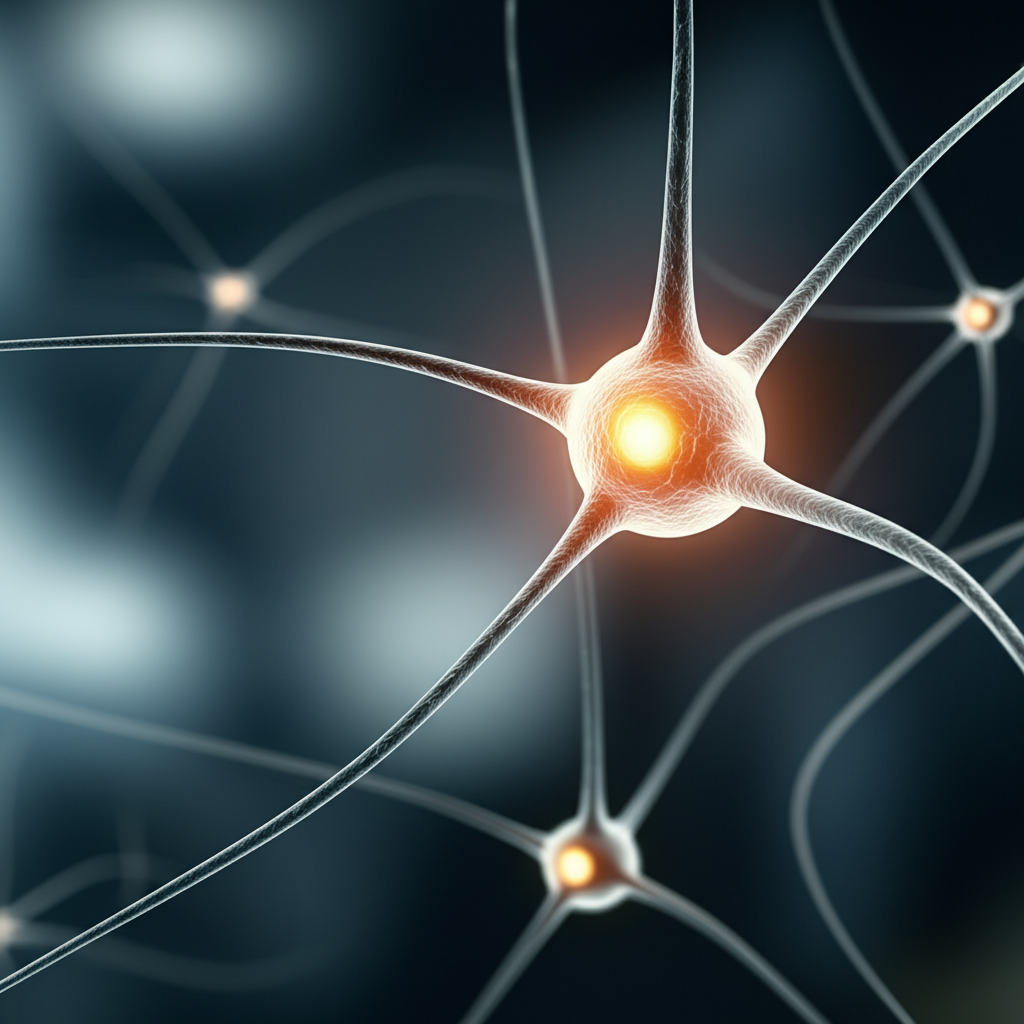
Before diving into their artificial counterparts, it’s helpful to briefly appreciate the biological neurons that inspired them. In your brain, a single neuron is a specialized cell designed to transmit information through electrical and chemical signals. Each biological neuron consists of:
Dendrites: Branch-like structures that receive signals from other neurons.
Cell Body (Soma): The main part of the neuron, which processes the incoming signals.
Axon: A long, slender projection that carries the signal away from the cell body to other neurons.
Synapses: Junctions where the axon of one neuron transmits a signal to the dendrite of another.
When a biological neuron receives enough strong signals through its dendrites, it “fires,” sending its own signal down its axon. This all-or-nothing principle of firing or not firing, based on a cumulative input exceeding a certain threshold, is a crucial concept that directly translates to the artificial world.
The Birth of the Artificial Neuron (Perceptron)
The idea of emulating the brain’s processing units computationally dates back to the 1940s and 50s. Frank Rosenblatt’s Perceptron, developed in 1957, is widely considered the first artificial neuron model, directly inspired by its biological counterpart. While vastly simplified, the Perceptron captured the essence of how a neuron receives inputs, processes them, and produces an output.
The goal of an artificial neuron is to take several input values, combine them in a specific way, and then decide whether to “activate” and pass on a signal, much like its biological ancestor. This simple yet powerful mechanism forms the bedrock of all modern neural networks.
The Blueprint of Artificial Neurons: Core Components
Let’s dissect the components of a typical artificial neuron, breaking down each part into an easily digestible concept.
Inputs: The Data Stream
Every artificial neuron receives one or more inputs. These inputs are numerical values that represent data points, features, or the outputs from other neurons in a network. For example, if you’re trying to predict house prices, inputs might include square footage, number of bedrooms, and location score.
Weights: The Importance Factor
Attached to each input is a weight (w). Think of a weight as a measure of the importance or strength of its corresponding input. If an input has a high positive weight, it means that input strongly contributes to the neuron’s activation. A high negative weight means it strongly inhibits activation. These weights are the parameters that the neural network “learns” during its training process; they’re constantly adjusted to improve the network’s performance.
Bias: The Activation Threshold Adjuster
The bias (b) term is an additional value added to the weighted sum of inputs. While weights control the slope of the activation function, bias allows us to shift it horizontally. Essentially, bias determines how easy or difficult it is for a neuron to activate, regardless of its inputs. It gives the neuron an intrinsic tendency to fire (or not to fire) even when all inputs are zero, providing a crucial degree of freedom in the model.
The Summation Function: Gathering Evidence
Inside the neuron, all inputs (x), each multiplied by its respective weight (w), are summed together, and then the bias (b) is added. This step can be represented as:
Sum = (x1 w1) + (x2 w2) + … + (xn wn) + b
This “sum” represents the total “evidence” or “signal strength” the neuron has gathered from its inputs.
The Activation Function: Making the Decision
The final and arguably most crucial step for an artificial neuron is the activation function. After computing the weighted sum plus bias, this function decides whether the neuron should “fire” and what kind of signal it should transmit. Without activation functions, neural networks would simply be performing linear regressions, limiting their ability to learn complex patterns.
Common activation functions include:
Sigmoid: Squashes the output between 0 and 1, excellent for probabilities.
ReLU (Rectified Linear Unit): Outputs the input directly if it’s positive, otherwise outputs zero. It’s computationally efficient and widely used.
Tanh (Hyperbolic Tangent): Squashes the output between -1 and 1.
The activation function introduces non-linearity into the network, enabling it to model highly complex, non-linear relationships in data – something a simple linear model cannot achieve.
Output: The Final Signal
The value produced by the activation function is the output of the neuron. This output can then serve as an input to other neurons in the next layer of a neural network, or it can be the final prediction or classification of the entire network.
How These Neurons Learn
The magic of artificial intelligence isn’t just in the structure of neurons, but in their ability to learn. During the training phase, a neural network is fed vast amounts of data. For each piece of data, it makes a prediction or classification based on the current values of its weights and biases. It then compares its output to the correct answer, calculates the error, and uses algorithms like “backpropagation” to slightly adjust the weights and biases in each neuron. This process is repeated thousands, sometimes millions, of times, gradually refining the weights and biases until the network consistently produces accurate results.
From Individual Neurons to Complex Networks
While a single artificial neuron can solve simple problems (like basic classification), the real power emerges when many neurons are connected to form layers, and these layers are stacked to create deep neural networks.
An input layer receives the raw data.
One or more hidden layers perform complex feature extraction and pattern recognition through their interconnected neurons.
* An output layer provides the final result, whether it’s a number, a category, or a more complex output.
Each neuron in these layers is performing the same “summation then activation” process, but the collective, interconnected activity allows the network to find intricate relationships and make sophisticated decisions that would be impossible for an individual unit.
Unlocking the Future with Neuron Understanding
Understanding the basic anatomy and function of an artificial neuron is not just an academic exercise; it’s the fundamental first step toward comprehending the universe of deep learning and artificial intelligence. By demystifying these individual processing units, you gain insight into why neural networks are so powerful, how they learn from data, and what makes them capable of revolutions in fields ranging from image recognition and natural language processing to drug discovery and autonomous driving. The journey into AI may seem vast, but it all begins with the humble, yet incredibly potent, neuron.
0 Comments